
The eBook Reader Blog

 Subscribe in a reader

Welcome to the eBook Reader Blog, where you can keep updated on the latest ebook reader news, free ebooks, ereader sales and discounts, and get hands-on, expert reviews of the latest new devices.

Please note that tags and categories only pertain to this blog, not the entire website.

Make sure to use the navigation to the left and the search box below to find more reviews and detailed articles about ebook readers and ebooks here on The-eBook-Reader.com.

Custom Search

Hanvon to Release the First Color E Ink eReader

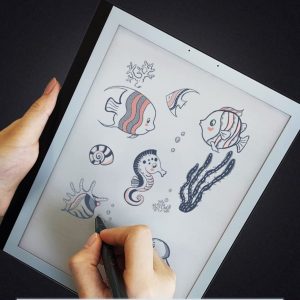
Hanvon Color eReader

Color E Ink is finally almost here. Hanvon, the largest ereader company in China with roughly 78% of the market share, is set to announce the first color E Ink ereader for release in China, which will be available in March of 2011.

The Hanvon color ereader will be the first of its kind, and will feature a large 9.68-inch display. It uses the same exact technology as regular black and white displays that are currently used on the Kindle, Sony Readers, etc. To make the color display, E Ink uses the same black and white screen with a color filter over the top.

What’s more, the color displays have the same long battery life that black and white displays have, weeks instead of hours. Even better, the color displays are viewable in bright light outdoors unlike LCD displays.

According to the source of this article over at The New York Times, there are a couple of drawbacks with the color E Ink displays:

However, the new color E Ink display, while an important technological breakthrough, is not as sharp and colorful as LCD. Unlike an LCD screen, the colors are muted, as if one were looking at a faded color photograph. In addition, E Ink cannot handle full-motion video. At best, it can show simple animations.

Given that, it will be interesting to see how well the Chinese market takes to this new type of color screen technology, especially considering the cost compared to that of the Apple iPad. The Hanvon color ereader is expected to sell for about $440, about $150 less than the iPad in China.

So will the color Hanvon be headed to the US anytime soon? Maybe. In the article there’s a quote from the founder and chairman of Hanvon that says it is a possible they will sell it in the US online from Fry’s electronics.

SiPix vs E Ink – eReader Screen Technologies Compared

SiPix vs E Ink

This SiPix vs E Ink review compares the Kindle 3 and Kobo WiFi’s E Ink screens with the new Pandigital Novel’s SiPix screen.

Read More

Amazon Adds LCD vs E Ink Section to Kindle Pages

E Ink vs LCD

I’ve been too busy lately to mention this, but a week or so ago, before the Nook Color was announced, I happened to notice that Amazon has added a new section to their Kindle product description pages comparing LCD displays with the E Ink Kindle screen.

Read More

Pearl vs Vizplex: Are the New High Contrast Pearl Screens Overrated?

Ever since Amazon announced the Graphite Kindle DX, the first ebook reader to have the new Pearl display from E Ink, the issue of higher contrast has been getting a lot of attention.

All the press releases regarding the new Kindles, along with Amazon’s website, and E Ink themselves state that the new Pearl displays have 50% improved contrast over the Vizplex screens that have been widely used on most ereaders up until now.

Shortly after the Kindle DX was released, there were comparison pictures all over the web showing the new DX next to the old DX and the difference was obvious.

But what about the fact that all Vizplex screens are not created equal.

Read More

E Ink Says Color Displays on the Way (Yet Again) This Time With Touchscreens

E Ink Touch, Color

There’s an article over at Digitimes about E Ink, the company behind the display technology used in most ebook readers today, sampling out two new color touchscreen electrophoretic displays to their vendors.

One of the new displays uses a capacitive touchscreen similar to those used on some cellphones and the Apple iPad, and the other uses an electromagnetic sensor like the Wacom touchscreens that requires the use of a stylus pen to detect input.

While E Ink has been mentioning color epaper for years (there are videos on YouTube dating back 3 years showing E Ink’s color technology), we have yet to see it used on anything but various prototypes. But according to the article, we could see an ereader using one of these new displays by the end of this year (don’t hold your breath). Here’s a quote:

As for color EPD, China-based vendor Hanvon has adopted its color EPD and is scheduled to launch e-book readers using the color EPD in the fourth quarter, Liu said. The e-book reader panel adopts E Ink’s latest Pearl EPD with color filter (CF), and it will have better response time and reflection, Liu explained, adding that E Ink expects color e-book readers to account for 10% of the global e-book reader market in 2011.

Hanvon is the major supplier of ebook readers in China; their devices can be found under the same brand name and other brand names in the US and Euorpe as well. Back at CES, Hanvon unveiled a new line of ebook readers that were supposed to be released to the US market, but so far that hasn’t happened yet, so who knows if we will really see a color E Ink display anytime soon.

New Sony Reader and Nook Coming Soon?

New Sony Reader?

Amazon got the jump on the new Pearl screens from E Ink with the release of the Graphite Kindle DX and the new WiFi-equipped Kindle 3. In fact, that’s one of Amazon’s major selling points: 50% improved contrast! 10:1 contrast ratio! Buy now!

Although we were all expecting Amazon’s next Kindle to have a color screen, the monochrome Pearl screens are a definite improvement over the old, but it doesn’t necessarily mean that you have to go and buy a new Kindle just to get one.

All the major ebook readers on the market, including the Sony Readers and Barnes and Noble Nook, all get their electrophoretic displays from the same manufacturer: E Ink.

So there’s no question that Sony’s new readers and the Nook (or Nook 2) will eventually get the new Pearl screens too. The only question is when.

Judging from past releases, Sony usually announces a new reader in August or September. And Sony’s actions over the past few months of signifigantly lowering the price of all three of their current ebook readers, especially the PRS-600, suggests that this year won’t be any different.

Sony’s PRS-600 hasn’t gone over as well as it could have with the touchscreen causing reflection and lowering the contrast of the text. Sony has lowered the price of it the most, probably because it hasn’t sold as well as the other two units. It recent weeks it has been listed on Amazon for as low as half the price of its initial MSRP of $300.

Given the popularity of 6-inch ebook readers, the PRS-600 is the unit that will most likely see a replacement first. And Sony’s touchscreens could majorly benefit from the new higher contrast screens.

As for Barnes and Noble, they too will want to start getting the new screens in both models of the Nook to counter the edge that Amazon currently holds in that category. The biggest question, though, is will we see a new Nook, a Nook 2, anytime this year?

It doesn’t really seem very likely for B&N to release another 6-inch Nook this year now that they just released the Nook WiFi, but it isn’t out of the realm of possibilities that Barnes and Noble could release a Nook with a larger screen size before the end of the year to compete with the Kindle DX.

With the recent announcements of NookStudy and partnerships with Blackboard, Flat World and others, Barnes and Noble continues to strengthen its position in the higher education market, already having over 600 on-campus retail stores. Given that, it makes a lot of sense for Barnes and Noble to come out with a device designed for textbooks and college students.

Graphite Kindle DX First Impressions, E Ink Pearl Mini Review

Kindle DX Graphite

The new Graphite Kindle DX arrived today. And it’s the first ebook reader to feature the new screen technology from E Ink, the leading supplier of epaper screens for most current ereaders.

Update: Several more pictures and a video review have been added to our new Kindle DX PDF review page.

First thing, I’m not a professional photographer—hardly an amateur one—so the pictures don’t do the new Pearl screen and Kindle DX any justice.

I tried doing some comparison photos with a regular Vizplex screen, but they just don’t come out displaying the difference in appearance accurately. I’ll try using a different camera for the main Kindle DX 2 review that I’ll be posting within a week, along with a video review.

The main thing that jumps out about the new Kindle DX and Pearl screen is that the text appears much darker, bolder. Blacks are blacker, and images are more rich and defined—Jules Verne’s jacket, for instance.

The screen background isn’t necessarily a whole lot whiter than the original E Ink screens—they’d probably be too bright in direct sunlight being any whiter—but the difference is definitely noticeable, and especially in lower lighting environments.

Kindle DX Text

The claim that the new Pearl displays have 50% increased contrast over current displays seems a bit much. It’s an improvement for sure, but it isn’t any reason to trade in your old Kindle unless bolder fonts and better contrast are really, really important to you.

If you took someone off the street that didn’t know anything about ebook readers and showed them the Nook, then took it away and showed them the new Kindle DX, the contrast probably wouldn’t be one of the first things they’d notice.

It’s when a Pearl screen and Vizplex screen are side-by-side that you can tell the most difference. And there’s little doubt that all the companies will start using the new Pearl displays in favor of the old ones. It probably won’t be long before Sony and B&N start using them.

Aside from the screen, the graphite Kindle DX has all the same features and functions as the 1st generation model, with some subtle upgrades to speed and performance, and of course the black color instead of white.

I’ll be posting a full review soon. Subscribe to The eBook Reader Blog’s RSS Feed to receive notification when the finished Kindle DX review goes live.

E Ink Announces New Screen Technology: Pearl

Kindle DX E Ink Pearl

E Ink Corporation, the company that supplies the epaper screens used in the majority of dedicated ebook readers, issued a press release today announcing their new display technology called Pearl.

This coincides with Amazon’s release of the new graphite Kindle DX, which will be the first ereader on the market to feature this new display technology that increases contrast ratio by 50% compared to current E Ink screens.

The new Pearl screens have the whitest reflective displays in the industry, according to the press release, and improved energy efficiency. E Ink claims that Pearl raises the bar for displays used in digital reading, that it allows for dedicated ebook readers to go from a contrast ratio typical of newspapers, to a higher contrast ratio typical of paperback books.

E Ink has the specifications of the new High Resolution Active Matrix Displays made with E Ink Pearl Imaging Film up on their website. They have them in all the typical sizes already used by ebook readers: 5, 6, 7, 8, and 9.7-inch displays.

The contrast ratio of the Pearl displays is listed at 10:1 (min), up from 6:1 for the Vizplex displays. The gray scale remains at 16 levels, with a viewing angle of nearly 180 degrees, and the “White State Reflectivity” is 40%.

The Kindle DX may be the first to implement the new Pearl screens from E Ink, but all the other companies will likely follow suit with their next generation devices. It isn’t color. But it is a step forward.

Video Interview with E Ink Vice President of Marketing

ARMdevices.net has posted a 17 minute video interview with the vice president of marketing at E Ink, Sriram Peruvemba.

E Ink displays are used in virtually all the current dedicated ebook readers on the market, with the exception of a few that have LCD screens and new SiPix screens. The Kindle, Nook, Sony Readers, Kobo Reader all have E Ink Vizplex displays.

E Ink’s popularity is do to the fact that the displays are easily readable in direct sunlight and are very energy efficient because the technology doesn’t require battery power while the text is on the screen, just when turning pages to refresh the display.

The video goes into details about E Ink’s new flexible plastic displays that are designed to be nearly indestructible. Plans are to use them for textbook replacements, among other applications. They also discuss the cost of E Ink displays and how prices are steadily decreasing each year, along with Sriram Peruvemba’s thoughts on the future of E Ink technology and how it is affected by products like the Apple iPad.

There’s a look at some other applications of E Ink technology too, including a wrist watch and smartcard—a prototype of an E Ink powered credit card with advanced security features.

Source: ARMdevices.net

Keep Updated

Subscribe Get Email Updates

rss RSS Feed

Facebook Follow on Facebook

Twitter Follow on Twitter

YouTube YouTube Channel

Support This Site

Find this website helpful? If so, please help support this site. It's free, easy, and only takes a couple seconds. Learn how »

Latest Reviews
Latest Blog Posts